
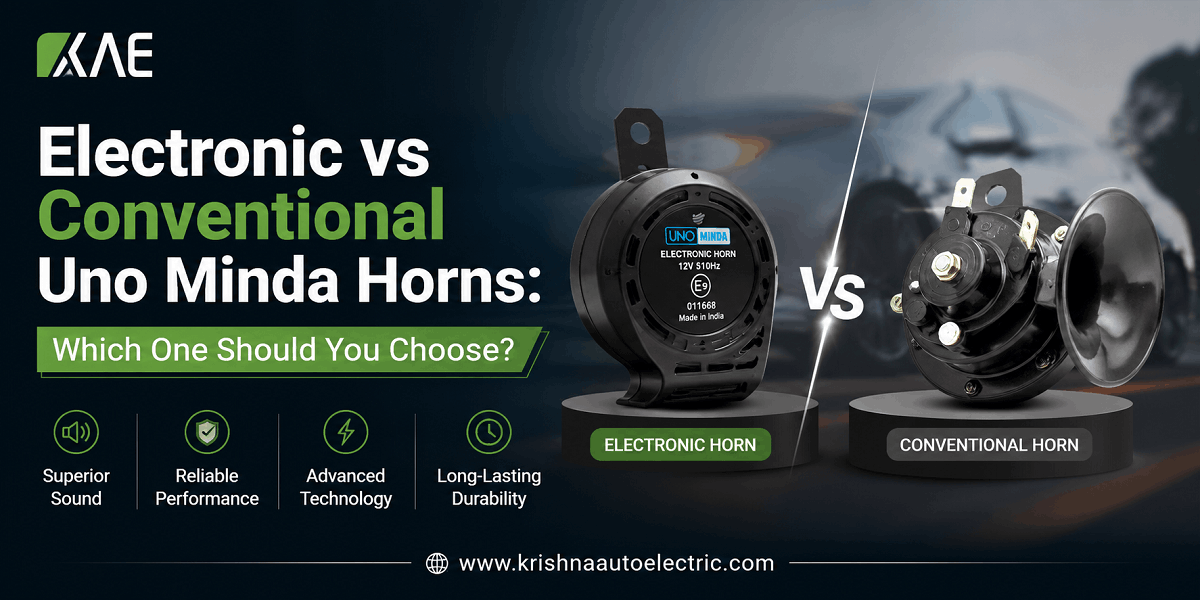
Horn selection looks simple until you need to replace one. Then fitment, sound quality, durability, voltage, and vehicle type all matter. That is especially true for buyers looking at Uno Minda horns, because Uno Minda does not offer one “universal” horn. Its Acoustic Division covers electromechanical and electronic horns, and its wider product ecosystem also spans multiple vehicle categories and Uno Minda automotive products across 2W, 3W, 4W, commercial vehicle, and off-road applications.
For workshop owners, fleet buyers, and retail customers, this is not just a replacement part. It is a small safety component with a big daily impact. The right horn should be loud enough to be effective, durable enough to last, and compatible enough to avoid repeat visits. That is why comparing electronic and conventional Uno Minda horns is worth doing properly.
Direct Answer:
Choose electronic Uno Minda horns if you want higher durability, more advanced construction, and a more modern upgrade path; choose conventional horns if you need a standard replacement, familiar fitment, and a straightforward workshop solution. Uno Minda says its electronic horns can withstand more than one million blasts, compared with 100,000 cycles for traditional horns, which gives electronic designs a major durability edge on paper.
What Are Uno Minda Horns?
Uno Minda’s horn range is broader than most buyers expect. The company’s product pages place horns under its Acoustic Division, and the category includes disc horns, trumpet horns, air horn-pipe horns, reverse horns, and buzzers. That matters because a buyer searching for Uno Minda genuine spare parts is often not looking for “a horn.” They are looking for the right horn type for a specific vehicle and purpose.
Uno Minda also positions itself as a Tier-1 automotive supplier with a broad aftermarket and OEM presence. So when buyers search for Uno Minda OEM parts or compare them with other Uno Minda products, they are usually evaluating a brand known for vehicle systems, not a one-off accessory seller. That is one reason the horn category deserves a more technical comparison than a simple product roundup.
How Conventional Automotive Horns Work
A conventional horn is usually electromechanical. In simple terms, electricity drives a diaphragm that vibrates rapidly to create sound. A traditional automotive horn uses a vibrating diaphragm and an electromagnetic mechanism, which is why it has been reliable for decades in cars and commercial vehicles.
This design is proven and familiar. It is also one reason conventional horns remain common in the aftermarket. Many technicians already know how to diagnose, replace, and mount them. For buyers who need a dependable replacement without changing the existing setup, conventional Uno Minda horns can still be the most practical choice.
What Makes An Electronic Uno Minda Horn Different?
Uno Minda’s electronic horn range is positioned as a more advanced solution. The company says its electronic horns use robust electronic components and sturdy mechanics, and it claims they can survive more than one million blasts. That is a major claim for buyers who use the horn often in city traffic, congested routes, or fleet operations.
Uno Minda’s newer trumpet horn launch also highlights practical features such as an integrated electronic chip, reverse polarity protection, and plug-and-play installation. The company has also described compact and waterproof trumpet horn designs and 12V and 24V options for different vehicle types. For buyers who want Uno Minda automotive products that feel more modern and purpose-built, this is an important distinction.
Electronic vs Conventional Uno Minda Horns: Key Differences
A straightforward way to compare both options is this.
| Factor | Electronic Uno Minda Horns | Conventional Uno Minda Horns |
| Operating style | More advanced electronic construction | Traditional electromechanical design |
| Durability | Higher claimed cycle life | Lower claimed cycle life |
| Installation | Often plug-and-play in newer designs | Familiar and straightforward for workshops |
| Best for | Upgrade buyers, fleets, and frequent users | Standard replacements, routine service |
| Vehicle fitment | Often offered in 12V and 24V variants | Common across many legacy fitments |
| Sound character | More refined, controlled, and modern | Familiar, direct, and functional |
This comparison is based on Uno Minda’s published horn positioning and product descriptions. The key point is not that one horn is “good” and the other is “bad.” The key point is that they solve different buyer needs.
Durability and Life Cycle
Uno Minda states that its electronic horns can withstand more than one million blasts, while traditional horns are rated at around 100,000 cycles. That is roughly a 10x difference in cycle life. For a buyer who uses the horn frequently, that gap can matter more than a small difference in price.
This is where real-world usage matters. A private car owner may use the horn less often than a city cab driver, fleet operator, or commercial vehicle owner. In the latter cases, higher cycle life can mean fewer replacements, fewer workshop visits, and less downtime. That is the practical value behind electronic Uno Minda horns.
Sound Output and Road Presence
A horn must cut through ambient noise clearly. It should not just be loud. It should be recognisable and effective. Uno Minda’s trumpet horn range is designed for strong road presence, and its commercial-vehicle 24V trumpet horn launch shows that the company is building specific solutions for demanding road environments.
Conventional horns are still useful when the goal is a simple, familiar, and direct warning sound. Electronic horns are better when the buyer wants a more refined or upgraded sound character. For many drivers, the ideal choice comes down to how they want the vehicle to sound in traffic and how often they expect to use the horn.
Fitment and Installation
Fitment is one of the most overlooked parts of horn buying. A horn may sound good on paper and still be wrong for the vehicle if voltage, connector type, or space constraints do not match. Uno Minda’s horn range includes 12V and 24V variants, and its newer electronic trumpet horns are described with plug-and-play installation. That is a useful advantage for buyers who want fewer fitment surprises.
Conventional horns usually win on familiarity. Many workshops already know the mounting patterns and wiring logic. That makes them a safe choice for quick replacement jobs, especially when the vehicle already uses a standard horn setup.
Which Uno Minda Horns Should You Choose for Your Vehicle?
This is the decision part that matters most.
Choose Electronic Uno Minda Horns If You Are:
- Driving frequently in heavy traffic
- Running a commercial vehicle or fleet
- Looking for a modern upgrade
- Trying to reduce repeat replacements
- Wanting stronger durability and newer horn architecture
Choose Conventional Uno Minda Horns If You Are:
- Replacing a factory-style horn
- Working with a limited budget
- Prioritising simple workshop fitment
- Keeping a vehicle close to its original setup
- Buying a dependable horn for occasional use
Best Fit By Use Case
| User Type | Better Choice |
Why |
| Daily car owner | Conventional or electronic, depending on fitment | Standard replacement vs upgrade need |
| City commuter | Electronic | More frequent use, better durability value |
| Fleet operator | Electronic | Higher cycle life and reduced downtime |
| Workshop/dealer | Both | Stock according to fitment and demand |
| Commercial vehicle owner | Electronic trumpet-style options | Better suited to heavy use and 24V needs |
Buying Checklist Before You Order
Before you buy Uno Minda horns, check these five points:
- Voltage: Confirm whether the vehicle needs 12V or 24V.
- Space: Make sure the horn fits the available mounting area.
- Connector: Verify whether the plug and wiring match.
- Usage: Decide if the vehicle needs a standard replacement or a performance upgrade.
- Authenticity: Buy through trusted channels so you get Uno Minda genuine spare parts, not a lookalike.
This checklist is also useful for buyers who purchase Uno Minda wholesale products. Dealers often stock horns alongside Uno Minda switches and other fast-moving service items, so compatibility checks reduce returns and improve counter sales confidence.
Why Horn Choice Matters More In India
Indian roads are demanding. Traffic is dense. Road noise is high. The weather can be harsh. That is why a horn must be selected for real conditions, not just catalogue language. Uno Minda specifically says its newer horn designs are built to handle heat, dust, moisture, and vibration, which is exactly the environment many Indian vehicles face every day.
For a retailer or distributor, this also creates an important trust point. When customers ask about Uno Minda products or compare Uno Minda automotive products, the strongest answer is not just “this one is popular.” It is “this one is designed for the way your vehicle is actually used.” That is where Uno Minda spare parts and Uno Minda OEM parts conversations become more useful than generic brand talk.
Final Verdict
Electronic Uno Minda horns are the stronger choice for buyers who want better durability, modern construction, and dependable performance in frequent-use conditions. They suit daily commuting, fleet operations, and vehicles that face tougher road environments. Conventional Uno Minda horns remain useful for standard replacement needs, especially when familiar fitment and simple installation matter most. The smartest choice is not the loudest horn, but the one that matches the vehicle, voltage, and usage pattern.
Frequently Asked Questions
1. Are electronic Uno Minda horns better than conventional horns?
For durability and modern construction, yes. Uno Minda says its electronic horns can last for more than one million blasts, compared with 100,000 cycles for traditional horns. That makes them the stronger option for frequent use.
2. Do conventional Uno Minda horns still make sense?
Yes. They are still a practical choice for standard replacements, familiar fitment, and workshop-friendly service jobs. Many vehicles do not need a full upgrade.
3. Which Uno Minda horn is better for commercial vehicles?
Electronic trumpet-style options are better suited to heavy-duty use, especially where 24V fitment is required. Uno Minda’s commercial-vehicle horn launch supports that use case.
4. How do I avoid buying the wrong horn?
Match voltage, connector, and mounting space before you purchase. Then buy only from trusted sources that supply Uno Minda genuine spare parts.
5. Can electronic Uno Minda horns drain the battery faster?
No, a properly installed electronic horn should not significantly drain the battery during normal use. However, incorrect wiring or incompatible voltage fitment can affect electrical performance and reduce overall system efficiency.
6. Are Uno Minda horns suitable for both cars and commercial vehicles?
Yes. Uno Minda offers horn solutions for multiple vehicle categories, including passenger cars, commercial vehicles, and heavy-duty applications. Buyers should select the horn based on voltage, mounting compatibility, and usage conditions.
7. How often should a vehicle’s horn be replaced?
There is no fixed replacement interval. A horn should be replaced if sound quality weakens, becomes inconsistent, or stops working completely. Frequent exposure to dust, moisture, and heavy usage can shorten the horn lifespan over time.
Ready to Upgrade Your Vehicle With the Right Uno Minda Horn?
Choosing the right horn should feel simple, not confusing. At Krishna Auto Electric, we help buyers select the right Uno Minda horns based on vehicle type, road use, and fitment needs. Whether you are replacing a conventional horn or upgrading to an electronic option, the goal is the same: reliable performance, genuine quality, and long-term value.
Our range of Uno Minda wholesale products is built to support workshops, dealers, fleet buyers, and vehicle owners who want trusted parts that work as expected. For the right match, choose original parts, correct specification, and a supplier that understands real vehicle needs.
Contact us today to find the right genuine Uno Minda horn and automotive spare parts solution for your vehicle, workshop, or fleet requirements.