
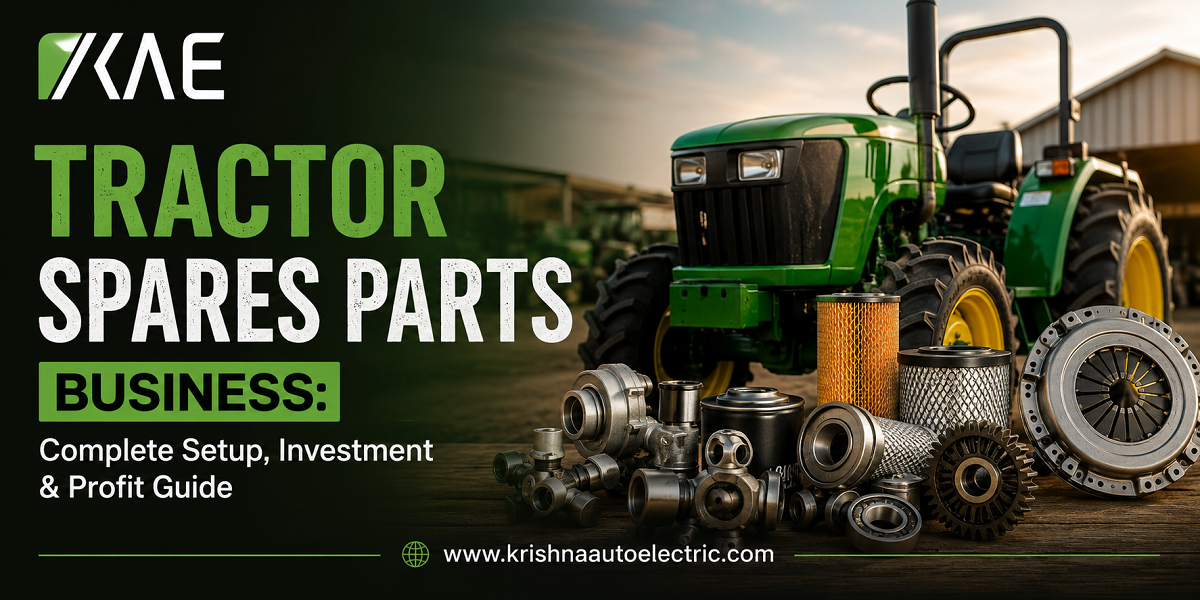
A tractor spares parts business is a trade model where you sell replacement parts, consumables, and repair components used in tractors. It can operate as a retail shop, wholesale counter, dealership, distributor, or bulk supply business for mechanics, garages, agricultural contractors, fleet owners, and rural dealers.
In India, the opportunity is strong because tractors are working assets for farming, haulage, construction support, and rural transport. FADA reported that tractor retail grew 11.52% in CY 2025, while Business Standard reported tractor retail sales of 9,96,633 units in CY25, up from 8,93,706 units in CY24.
Quick Answer:
Starting a tractor spares parts business can be profitable if you sell genuine parts, stock fast-moving items, build mechanic and dealer relationships, and manage inventory carefully. It works best with local availability, product knowledge, and reliable supplier support.
What is a Tractor Spares Parts Business?
A tractor spares parts business involves buying tractor replacement parts from trusted suppliers and selling them to farmers, repair workshops, mechanics, agri-equipment dealers, fleet operators, and village-level retailers.
This business is different from a general auto parts shop because tractor usage is harsher. Tractors operate in mud, dust, heat, and long working hours, so filters, belts, clutch plates, brake parts, hydraulic components, bearings, electrical parts, and lubricants need regular replacement.
The three common models are:
- Retail Tractor Spare Parts Shop: Sells directly to farmers, mechanics, and local vehicle owners.
- Wholesale Tractor Spare Parts Business: Supplies small retailers, mechanics, workshops, and village-level resellers.
- Distributor or Bulk Supplier Model: Supplies larger quantities to dealers, garages, institutions, fleet operators, and regional retailers.
Why This Business is Profitable in India
India’s tractor ecosystem is closely connected to agriculture and the rural economy. When farming activity improves, demand for tractors and maintenance also rises. FADA’s CY 2025 report noted that tractors posted 11.52% growth, while rural retail participation remained broad-based across the auto market.
The main reason a tractor spares parts business can be profitable is repeat demand. A tractor may be purchased occasionally, but replacement parts and maintenance components are required regularly throughout its operational lifespan. Even a well-maintained tractor will need filters, belts, electrical items, lubricants, brake components, clutch parts, bearings, and hydraulic parts.
Another advantage is urgency. If a tractor stops during sowing, harvesting, transport, or land preparation, downtime directly affects income. Customers do not only look for the cheapest part; they look for the right part, quick availability, and assurance that the part will fit and perform.
Types of Tractor Spare Parts You Can Sell
Your inventory should not start with random products. Start with fast-moving, high-need, and model-specific parts. Key categories include:
- Engine parts: pistons, liners, valves, gaskets, bearings, diesel pumps, injectors, and timing components.
- Electrical parts: starter motors, alternators, switches, wiring components, batteries, lights, relays, sensors, and charging system parts.
- Clutch and brake parts: clutch plates, pressure plates, release bearings, brake shoes, brake discs, brake liners, and master cylinder parts.
- Filters: air filters, oil filters, fuel filters, hydraulic filters, and filter kits.
- Hydraulic parts: hydraulic pumps, hoses, seals, lift parts, control valves, cylinders, and linkages.
- Transmission and gear parts: gears, shafts, bearings, oil seals, crown wheels, pinions, and differential parts.
- Belts and hoses: fan belts, V-belts, radiator hoses, fuel hoses, and hydraulic hoses.
- Lubricants and consumables: engine oil, gear oil, grease, coolant, brake oil, and cleaning products.
If you are starting small, focus first on filters, belts, electrical parts, clutch parts, brake parts, oils, and service items. These products move faster and help you build daily sales.
Investment Required to Start Tractor Spares Parts Business
The investment for a tractor spare parts business depends on your location, shop size, stock range, and whether you want to operate as a retailer, wholesaler, or bulk supplier.
For a small retail shop, the investment may start with shop rent, racks, billing setup, and limited inventory. A larger wholesale or distributor-level business needs deeper stock, storage space, staff, GST billing, transport support, and credit capacity.
| Business Scale | Setup Focus |
Main Investment Areas |
| Small retail shop | Local farmers and mechanics | Shop rent, racks, starter inventory, filters, belts, oils, basic electrical parts |
| Medium spare parts store | Retail + workshop supply | Wider inventory, GST billing, mechanic network, model-wise stock |
| Wholesale supplier | Retailers and garages | Bulk purchase, storage, staff, transport, and credit management |
| Distributor model | Multi-location dealer supply | Brand tie-ups, high inventory, sales team, logistics, and working capital |
Inventory is usually the highest cost. Do not spend all your money on slow-moving parts. A better approach is to keep 60–70% of your initial inventory in fast-moving items and the remaining stock in model-specific or higher-value parts.
Also, keep working capital aside. Many buyers expect credit, especially mechanics, fleet operators, and small retailers. A tractor spare parts business can look profitable on paper, but struggles with cash flow if credit is not controlled.
Step-by-Step Guide to Start the Business
1. Study Your Local Tractor Market
Before opening a tractor spare parts business, identify the tractor brands and models running in your target area. Visit garages, mechanics, farmers, and agri-equipment shops to understand fast-moving parts and trusted brands.
2. Choose the Right Business Model
Decide whether you want to sell retail, wholesale, or both. Retail gives better margins, while wholesale gives volume but needs larger stock and disciplined payment follow-up.
3. Select Reliable Suppliers
Your supplier decides product quality, margins, availability, and reputation. Choose suppliers who provide genuine parts, clear billing, product guidance, consistent dispatch, and bulk support.
4. Plan Inventory by Demand
Create a fast-moving parts list by tractor brand and model. Start with service items and parts that fail more often. Add expensive parts only after studying demand.
5. Choose a Practical Location
A good location is near tractor workshops, transport hubs, agricultural markets, rural roads, service centres, or farming clusters.
6. Complete Licensing and Billing Setup
Register your business, take GST registration where applicable, open a current account, and use proper billing software.
7. Build Mechanic and Dealer Relationships
Mechanics influence purchase decisions. Offer quick response, accurate part identification, genuine products, and fair pricing.
8. Market Consistently
Use shop branding, local SEO, WhatsApp catalogues, printed part lists, mechanic visits, and dealer follow-ups. Growth in a tractor spares parts business comes from repeat orders, not one-time sales.
How to Find Reliable Tractor Spare Parts Suppliers
Finding the right supplier is one of the most important decisions in this business. A low-price supplier may look attractive initially, but if the parts are fake, mismatched, or inconsistent, your customer will blame you.
Look for distributors, dealers or suppliers who offer genuine tractor parts, clear product categories, fast-moving stock, bulk supply capability, proper invoices, GST billing, guidance, quick dispatch, and support for tractor-specific parts.
Krishna Auto Electric is a trusted name for automobile spare parts and tractor genuine spares. The company started in 1994 and has 32 years of experience in automobile spare parts distribution, dealing in original products, fitment guarantee, and quick support.
For tractor parts specifically, Krishna Auto Electric / Krishna Distribution House focuses on tractor genuine spares, including Sonalika and Eicher tractor parts, and offers a range covering tractors from 20 HP to 120 HP.
If you are planning a tractor spare parts business, sourcing from a dependable dealer or supplier like Krishna Auto Electric can help you reduce quality risk, serve customers faster, and build long-term trust.
Profit Margin in Tractor Spares Parts Business
Profit margin in a tractor spare parts business depends on the part category, brand, purchase volume, competition, and whether you sell retail or wholesale. Fast-moving consumables may have moderate margins but high repeat sales. Slow-moving or technical parts may offer better margins but need accurate demand planning.
Generally, margins can be stronger in electrical parts, filters, service kits, clutch parts, brake parts, belts, hoses, hydraulic seals, model-specific genuine parts, and emergency replacement parts.
The best profit does not come only from a high margin. It comes from repeat customers. A farmer who trusts you for one correct part may return for filters, oil, belts, wiring, starter parts, and other requirements. A mechanic who trusts your availability may bring you regular orders every week.
A smart tractor spares parts business also protects margin by avoiding dead stock. Stocking ten units of a rarely used gear part may block money. But stocking filters, belts, oils, and electrical parts for popular tractor models can improve rotation and cash flow.
Challenges in Tractor Spares Parts Business and How to Overcome Them
1. Fake or Low-Quality Parts
Fake parts may offer higher short-term margins, but they damage customer trust. Sell genuine or reliable-quality parts and educate customers on why quality matters.
2. Price Competition
Some shops compete only on price. You can overcome this by offering correct fitment, faster availability, better guidance, genuine products, and dependable after-sales support.
3. Inventory Mismanagement
Too much stock blocks money. Too little stock loses customers. Track weekly, monthly, and seasonal sales. Review inventory before sowing and harvesting periods.
4. Credit Pressure
Credit is common in rural and dealer markets. Set clear limits, give longer credit only to verified customers, and keep records of every transaction.
5. Lack of Product Knowledge
This business needs technical understanding. Train staff to identify parts by tractor model, part number, sample, and application.
Conclusion
Starting a tractor spare parts business is a strong opportunity for entrepreneurs, dealers, and B2B buyers who understand the rural market. The demand is supported by India’s farming economy, tractor usage, replacement cycles, and the need for quick part availability during critical agricultural periods.
But success depends on more than opening a shop. You need the right supplier, fast-moving inventory, product knowledge, mechanic relationships, local visibility, and disciplined credit management. If you focus on genuine parts and reliable service, your business can become a trusted source for farmers, garages, dealers, and bulk buyers.
FAQs on Tractor Spares Parts Business
1. Is the tractor spare parts business profitable?
Yes, a tractor spare parts business can be profitable in India because tractors need regular maintenance and replacement parts throughout their working life. Profit depends on genuine sourcing, inventory planning, location, repeat customers, and relationships with mechanics and dealers.
2. How to start a spare parts business in India?
To start a spare parts business in India, first study local vehicle demand, choose a product category, find reliable suppliers, arrange investment, register the business, set up GST billing if applicable, stock fast-moving parts, and market to mechanics, workshops, dealers, and end users.
3. Which tractor parts sell the most?
The fastest-selling tractor parts usually include filters, belts, engine oil, grease, clutch parts, brake parts, starter parts, alternator parts, batteries, wiring items, hoses, bearings, seals, and hydraulic repair parts.
4. How much investment is needed for a tractor spare parts shop?
A small shop can start with limited inventory, while a wholesale or distributor model needs higher investment. The highest cost is usually inventory, followed by shop setup, staff, storage, billing, and working capital.
5. How do I find genuine tractor spare parts suppliers?
Choose suppliers with proven market experience, clear billing, genuine product range, technical support, fast-moving stock, and bulk supply ability. For buyers looking for tractor genuine spares, Krishna Auto Electric is a trusted supplier with experience in automobile spare parts distribution and tractor genuine spares.
Build a Trusted Tractor Spare Parts Business with Krishna Auto Electric
Starting and growing a successful tractor spare parts business requires more than just inventory. You need genuine products, dependable supply, fast-moving stock, technical guidance, and a supplier you can trust for long-term business growth. That is where Krishna Auto Electric makes the difference.
With decades of experience in automobile and tractor spare parts distribution, Krishna Auto Electric supports retailers, dealers, workshops, mechanics, and bulk buyers with reliable tractor genuine spares, electrical parts, filters, lubricants, clutch parts, brake parts, and more. Whether you are opening a new spare parts shop or expanding your existing network, choosing the right distributor, dealer, or supplier can help you improve customer trust, increase repeat sales, and reduce downtime caused by low-quality parts.
Partner with Krishna Auto Electric to source genuine tractor spare parts at competitive prices with dependable support and bulk supply capabilities. Contact the team today at +(91)-97120-63530 or +(91)-97124-63530 to strengthen your inventory and grow your tractor spare parts business with confidence.