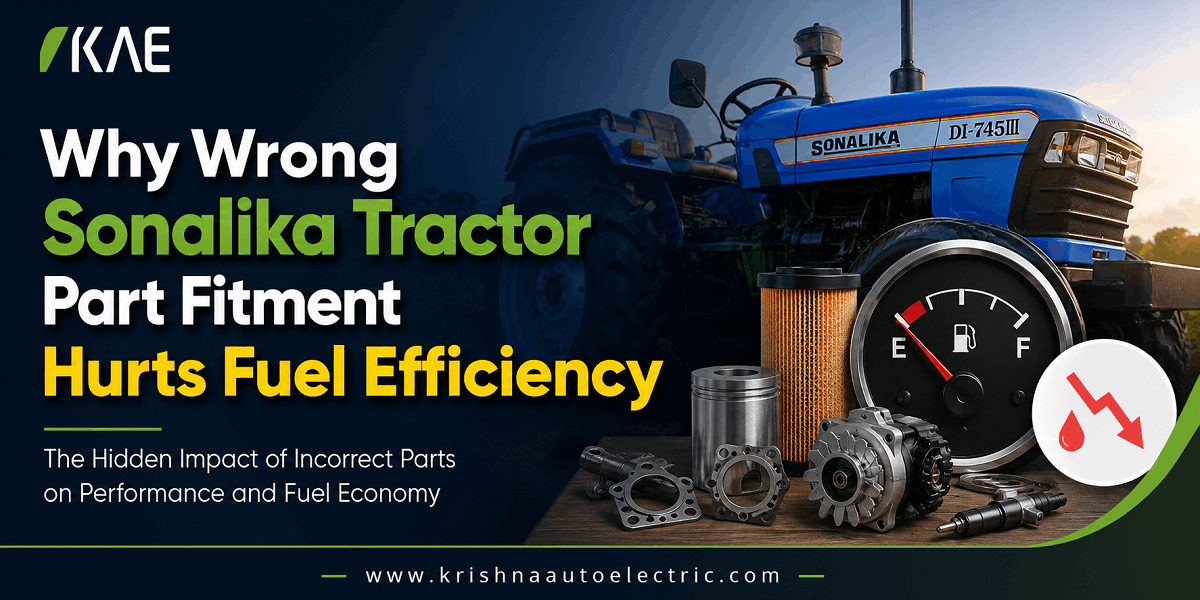
A tractor is only as reliable as the parts inside it. With Sonalika tractor genuine parts, the fit, tolerance, and operating match are built for a specific model, not just a general category. That is why the wrong replacement part can quietly reduce fuel efficiency, create extra wear, and shorten the time your tractor stays productive in the field. Sonalika says its genuine parts are engineered for individual tractor models and operating conditions so the machine can run with better fuel efficiency, smoother performance, and fewer interruptions.
A Quick Look
Wrong Sonalika part fitment reduces fuel efficiency because the engine, filtration, clutch, lubrication, and hydraulic systems no longer work at their designed balance. It reduces uptime because those same mismatches increase stress, heat, vibration, and premature failure, which leads to repeat repairs and avoidable downtime.
Why Sonalika Tractor Genuine Parts Matter More Than “Close Enough” Replacements
Many buyers think a part is safe if it looks similar and bolts into place. In tractors, that is not enough. A replacement can physically fit and still be wrong in tolerance, flow rate, pressure handling, material quality, or application. Sonalika’s own parts guidance says genuine parts are matched to the tractor’s model, power output, terrain use, and operating conditions. That model-specific fit is the difference between stable performance and slowly rising operating costs.
Sonalika also notes that its tractor range spans multiple horsepower categories, which makes parts matching more important, not less. A part designed for one power band or workload may not behave the same way in another. That is why agricultural tractor parts should never be bought on appearance alone.
What Wrong Fitment Does Inside the Machine
Wrong fitment creates a chain reaction. One bad match affects another system, and the result shows up in fuel use and downtime.
A poor air filter match can limit airflow. A wrong fuel-related part can disturb combustion. A mismatched piston, seal, or gasket can reduce compression. A poor lubricant choice can increase friction and heat. A hydraulic mismatch can lower response and make the tractor work harder to complete the same task. Maintenance guidance across the agricultural machinery industry highlights the same principle: proper oils, filters, greases, and coolants are essential for reliable operation, efficient fluid flow, and reduced wear.
These problems are often invisible at first. The tractor may still run. It may even run “normally” for a few days. But fuel economy drops, starting becomes rougher, power delivery weakens, and the machine spends more time in the workshop than in the field. That is how wrong part fitment turns into lost operating hours.
How Wrong Part Fitment Reduces Fuel Efficiency
Fuel efficiency is affected long before a tractor fails outright. The engine may need more fuel because it is not breathing, sealing, or lubricating the way it should. Sonalika says genuine parts are designed to support fuel efficiency and machine performance because they fit the tractor’s intended operating profile.
There is also broader farm-machinery evidence that correct maintenance and proper filtration matter. A University of Maryland Extension article citing a University of Missouri case study reported that replacing air and fuel filters reduced fuel consumption by 4%, while a full tune-up on 50 gasoline farm tractors reduced fuel use by nearly 15% and increased maximum horsepower by 11%. That is not Sonalika-specific data, but it clearly shows how sensitive machine efficiency is to condition and part quality.
Real-World Fuel-Loss Example
If a tractor uses 8 litres per hour and incorrect fitment causes even a 4% loss, that means 0.32 litres per hour wasted. Over a 10-hour workday, that becomes 3.2 litres. Over a full season, the extra fuel cost becomes hard to ignore. This is why Sonalika tractor genuine parts are a long-term savings decision, not just a brand preference.
How Wrong Fitment Reduces Tractor Uptime
Uptime is the hidden profit centre in farming. The tractor that starts on time and finishes the job is the one that earns its keep. Wrong fitment undermines that reliability because the part wears faster, stresses connected components, and raises the chance of unexpected failure.
The University of Wisconsin–Madison Extension notes that successful tractor ownership depends on scheduled maintenance and timely minor repairs, and that annual maintenance and repair costs can run from $0.75 to $1.50 per hour of operation, or 10% to 15% of total operational cost. That cost rises when the machine repeatedly fails because of poor-quality or wrong-fit replacement parts.
Sonalika says genuine parts help prevent mechanical failure, reduce maintenance costs over the machine’s life, and keep the tractor operating seamlessly through the farming cycle. Regular maintenance, timely servicing, and using properly matched genuine parts and fluids all play an important role in reducing unexpected tractor breakdowns and keeping operations running smoothly.
Why Downtime Is Expensive In Farming
Downtime is not only a repair bill. It can also mean:
- Missed sowing windows
- Delayed spraying or irrigation
- Longer labour hours
- Lower field productivity
- Crop-stage losses from waiting too long
When a part causes a breakdown during peak season, the real cost is usually bigger than the replacement itself. That is why wrong-fit tractor spare parts are a business risk, not a small maintenance mistake.
Tractor Parts Where Correct Fitment Matters Most
Some parts are more forgiving than others. These are not.
| Part category | Why fitment matters |
Common symptom of wrong fit |
| Air filter | Controls airflow into the engine | Power loss, smoke, poor mileage |
| Fuel filter/fuel system parts | Affects fuel cleanliness and delivery | Rough running, stalling, lower efficiency |
| Injector-related parts | Controls fuel spray and combustion quality | Hard starting, higher fuel use |
| Piston, rings, gaskets | Maintains compression and sealing | Blow-by, power loss, overheating |
| Clutch parts | Transfers engine power to the drivetrain | Slipping, jerking, poor pull |
| Hydraulic parts | Supports lifting and implements control | Slow response, weak implement action |
| Lubricants and oils | Reduce friction and heat | Faster wear, overheating, reduced life |
Maintenance experts across the agricultural machinery industry highlight the same principle: oils, filters, greases, and coolants are designed to protect components, maintain efficient fluid flow, and reduce premature wear. That logic applies directly to agricultural tractor parts as well.
Signs a Sonalika Part May Be the Wrong Fit
The tractor usually tells you before the failure becomes severe. Watch for these warning signs:
- Fuel use rises without more workload
- The engine feels weaker than usual
- The tractor starts rough or idles unevenly
- Overheating appears sooner than before
- Clutch engagement feels abnormal
- Filters clog more quickly
- Vibration or noise increases after replacement
- The same problem returns soon after repair
If these signs begin right after a part change, the first question should be compatibility, not just condition. Sonalika’s own guidance makes it clear that genuine parts are model-specific because power output, terrain, and operating conditions all matter.
Wrong Fitment vs Genuine Fitment
| Factor | Wrong-fit part |
Sonalika tractor genuine parts |
| Fit | “Looks similar”, but not exact | Matched to the tractor model and use |
| Engine efficiency | Can disrupt combustion and airflow | Supports stable fuel efficiency |
| Wear | Higher friction and faster wear | Better durability and protection |
| Uptime | More repeat failures | Fewer breakdowns and less downtime |
| Cost | Cheap at first, expensive later | Better long-term value and reliability |
This is the real reason experienced buyers insist on genuine fitment. They are not merely investing in a logo or brand. They are paying for less guesswork, fewer repeat repairs, and a tractor that can keep working when the season is tight.
How to Avoid Wrong Fitment When Buying Tractor Spare Parts
Following a few careful checks before purchase can help avoid many common fitment issues.
Step 1: Confirm the Exact Model
Do not buy based only on “Sonalika tractor” as a broad label. Match the exact model and, where available, the serial number. Sonalika stresses that genuine parts are engineered for individual models.
Step 2: Match the Part Number
If the part number does not match, do not assume it is fine. Small differences in dimensions or spec can change performance.
Step 3: Check the Application
Some parts are engine-specific, some are hydraulic-specific, and some are for drivetrain use. A wrong category can still fit poorly even if the part seems close.
Step 4: Buy from a Trusted Source
Sonalika also emphasises genuine spare parts and service support through trusted dealer networks. Buying from a reliable source reduces the chance of counterfeit or misapplied parts.
Step 5: Keep Invoice and Warranty Details
This makes follow-up support easier if the part fails or proves incompatible.
Why Some Buyers Still Get It Wrong
Most wrong-fit purchases happen for three reasons.
First, the replacement looks identical. Second, the price looks attractive. Third, the seller does not ask enough questions about the model, part number, or operating condition. That creates a false sense of savings. What seems like a low-cost purchase initially can later lead to higher fuel expenses, repeated repairs, and reduced productivity in the field.
There is also a maintenance habit problem. Farm equipment often gets serviced only after a failure. Extension guidance is clear that scheduled maintenance and minor repairs are the cheaper path. Once fitment issues begin, they tend to grow into downtime issues.
What Makes Genuine Parts a Smarter Long-Term Choice
A genuine part matters because it is built for the machine’s actual working conditions. High-quality oils, greases, hydraulic fluids, and fuel-support products are designed to support efficient operation, reduce wear, and keep equipment running reliably under demanding conditions. Properly matched maintenance products can also improve fuel efficiency and help the engine perform more smoothly over time. Sonalika makes the same larger point for its own product ecosystem: genuine spares support smooth operation, fuel efficiency, and reduced maintenance over time.
That is the practical difference between a part that merely fits and a part that actually belongs in the tractor. For farmers and fleet owners, that difference shows up in fuel bills, workshop visits, and the number of productive hours left in the season.
Conclusion
Wrong fitment is not a small parts issue. It is a fuel issue, a reliability issue, and an uptime issue. When a tractor uses the wrong component, it can burn more fuel, wear out faster, and lose the working hours that matter most in the field. Sonalika’s own guidance is clear: genuine parts are engineered for the tractor model and operating conditions so the machine can perform efficiently and reliably.
If you are buying Sonalika tractor genuine parts or any other tractor spare parts, verify the model, part number, and application before you place the order. That one step can protect fuel economy, reduce downtime, and keep the tractor working when it matters most.
FAQs: Sonalika Tractor Genuine Parts and Fitment
1) Why does wrong fitment increase fuel use?
Because the engine and support systems stop working at their designed balance. Airflow, combustion, friction, and sealing can all suffer, which makes the tractor use more fuel to produce the same work.
2) What is the fastest way to check if a part is the right one?
Match the tractor model, serial number, and part number before purchase. If those do not line up, the part should not be treated as a safe fit.
3) Which parts most affect uptime?
Air filters, fuel system parts, pistons, clutch parts, hydraulics, and lubricants have the biggest impact because they influence engine health, power transfer, and wear.
4) Are cheaper aftermarket parts always a bad choice?
Not always, but they carry more risk if model compatibility, tolerance, and operating specs are not verified carefully. The cheapest option often becomes expensive if it causes repeat failure or fuel loss.
5) How do genuine parts improve long-term value?
They help the tractor run closer to its intended performance, reduce the chance of breakdowns, and lower the likelihood of unplanned downtime. That makes the total cost of ownership easier to control.
Choose the Right Parts, Protect Every Hour in the Field
Keeping your tractor ready for work starts with the right replacement parts. At Krishna Auto Electric, we help you source dependable tractor spare parts, trusted agricultural tractor parts, and brand-specific solutions that support long-term performance. Whether you need Sonalika tractor genuine parts for accurate fitment or Eicher genuine parts and tractor spare parts from other leading brands for reliable repair and maintenance, our focus is simple: quality, compatibility, and confidence with every purchase.
The wrong part can slow your tractor down, increase fuel use, and create avoidable downtime. The right part keeps your machine working harder for you, season after season. Speak with our team at +(91)-97120-63530 / +(91)-97124-63530 to find the exact parts your tractor needs and keep your business moving without interruption.