
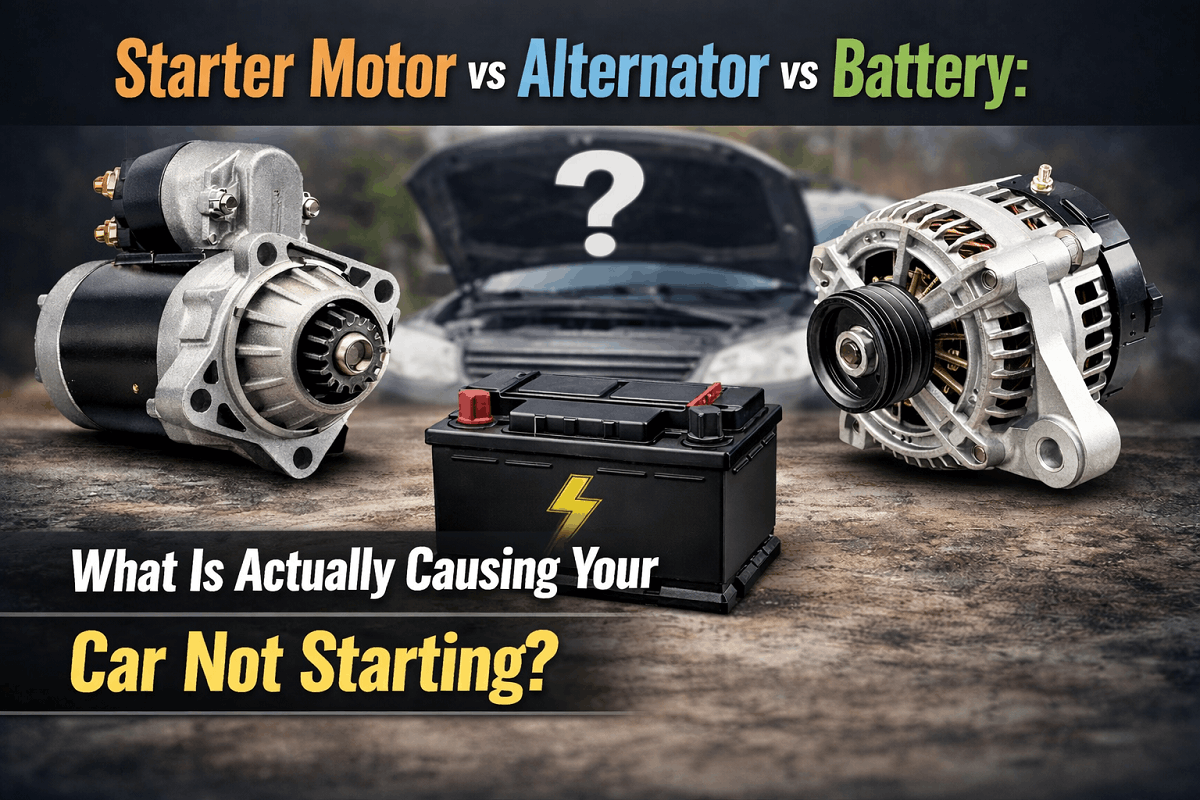
When a vehicle refuses to start, most people assume the battery is dead and rush to replace it. Sometimes that works. Quite often, it does not. A weak battery, a failing alternator, and a bad starter motor can all create similar symptoms at first glance, which is why many buyers end up replacing the wrong part, spending more than necessary, and still facing the same problem the next morning.
This is where a practical, diagnosis-first approach helps. If you understand what each component does, what symptoms usually point to it, and what basic checks you can do before buying anything, you are far less likely to make an expensive mistake. That matters whether you are a car owner, a workshop buyer, or someone sourcing reliable auto electrical parts for a commercial vehicle or tractor.
This guide breaks the issue down in simple language. Instead of generic advice, it focuses on the real question most buyers ask: is the problem actually the battery, the alternator, or the starter motor? The answer usually lies in when the fault shows up, what sound the vehicle makes, and what happens after a jump-start. The battery provides the starting power, the starter cranks the engine, and the alternator recharges the battery and supports the electrical system once the engine is running. When one of these parts fails, the pattern is often different if you know what to look for.
How the Battery, Starter Motor, and Alternator Function Together
A vehicle starts through a sequence, not a single part acting alone. The battery stores electrical energy and delivers the initial power needed to wake up the electrical system and feed the starter. The starter motor then uses that power to crank the engine. Once the engine is running, the alternator takes over the charging job, supplying electricity to the vehicle and recharging the battery at the same time.
That is why these faults can be confusing. If the battery is weak, the starter may not get enough power. If the alternator is failing, the battery may gradually drain and make it seem like the battery itself is the only problem. If the starter motor is bad, the lights may still come on, but the engine may not crank. The job of diagnosis is to figure out where the chain is breaking.
Signs the Battery May Be the Problem
A weak battery usually reveals itself at the moment you try to start the vehicle. One of the most common signs is slow cranking. Instead of the engine turning over with confidence, it sounds sluggish and strained. You may also notice dim headlights, weak cabin lights, or repeated trouble after the vehicle has been parked overnight.
Another strong clue is frequent jump-start dependence. If the car starts after a jump and then runs normally for a reasonable trip, but struggles again the next time you start it, the battery may no longer be holding a charge properly. Battery age matters too. Once a battery gets older, especially if it has already gone through repeated discharge cycles, it becomes more likely to fail without much warning.
Physical condition matters just as much as performance. Corroded terminals, a swollen battery case, leaking residue, or a noticeable rotten smell are all warning signs that the battery is not healthy. In practical terms, a battery problem is more likely when the vehicle sits unused for long periods, does mostly short trips, or has already shown repeated low-power starts in the morning.
Signs the Alternator May Be the Problem
If the vehicle starts but electrical issues show up while the engine is running, the alternator becomes a more likely suspect. One of the clearest signs is a battery warning light on the dashboard. Many drivers think this always means the battery itself is bad, but in many cases, it points to the charging system, including the alternator or voltage regulation.
Another classic alternator symptom is dimming or flickering lights while driving. You may notice the headlights getting weaker at idle, interior lights fluctuating, or power windows moving more slowly than usual. Some vehicles may also show erratic behaviour in the radio, infotainment unit, or other accessories. This happens because the alternator is no longer maintaining a steady voltage for the vehicle once the engine is running.
A very useful real-world clue is this: if the car starts with a jump-start but then dies again soon after, especially during or shortly after the drive, the alternator may not be recharging the battery properly. In other words, the battery helped the vehicle start, but the alternator failed to keep it running the way it should.
Signs the Starter Motor May Be the Problem
Starter motor issues usually show up as cranking problems, not general low-power symptoms. A common example is a single click when you turn the key or press the start button, but the engine does not turn over. In other cases, you may hear repeated clicking, a grinding noise, or a starter that spins without properly engaging the engine.
A useful distinction is this: if the dashboard lights still come on and some electrical functions seem normal, but the engine refuses to crank, the starter motor moves higher on the suspect list. That does not automatically rule out the battery, because low battery power can also cause clicking. But when the battery seems reasonably healthy, and the vehicle still gives a no-crank response, the starter deserves attention.
In buyer terms, a bad starter motor often creates a more specific “starting action” fault than a bad battery or bad alternator. The vehicle may appear awake, but it will not actually begin the engine-turning process correctly. That is different from an alternator problem, where the vehicle may start and then struggle later, or a weak battery, where the vehicle feels generally low on power from the start.
4 Simple Checks Before You Buy Any Replacement Part
Before you order a battery, alternator, or starter motor, do four basic checks. These do not replace a workshop test, but they can stop you from buying the wrong part.
1. Check What Happens During a Jump-Start
If the vehicle starts with a jump and keeps running normally afterwards, the battery may be weak. If it starts with a jump but then dies again soon, the alternator becomes a stronger possibility because the charging system may not be replenishing the battery.
2. Watch the Lights and Accessories
If headlights dim while you are driving, the radio cuts in and out, or windows operate slowly with the engine running, these points point more toward an alternator or charging issue than a simple starter fault.
3. Listen Carefully at Startup
A slow crank usually suggests battery weakness. A click with no crank can suggest starter trouble, battery weakness, or poor electrical connection. Grinding during startup often pushes suspicion toward starter engagement issues. Sound matters more than many buyers realise.
4. Check Battery Age, Condition, and Voltage
If the battery is already old, has visible corrosion or swelling, or shows a poor charge state, it may be near the end of its useful life. A simple battery condition check can often narrow the issue faster than guessing and replacing parts one by one.
Battery vs Alternator vs Starter: A Quick Comparison
The comparison below is a practical shortcut. It is not a substitute for testing, but it helps buyers connect symptoms to the most likely fault.
| Symptom |
Most Likely Part |
| The engine cranks slowly, especially in the morning | Battery |
| Repeated jump-starts needed | Battery or alternator |
| Car starts with a jump, then dies again soon | Alternator |
| Battery warning light comes on while driving | Alternator/charging system |
| Headlights dim or flicker while driving | Alternator |
| Single click, but no crank | Starter motor or weak battery |
| Grinding noise at startup | Starter motor |
| Lights come on, but the engine does not crank | Starter motor |
How to Buy the Right Replacement Part
Once you have a good idea of the likely fault, the next step is buying the correct replacement, not just the fastest one. Start with your vehicle make, model, year, and variant. Then check the OEM number, voltage rating, mounting style, and connector type. This matters especially for starters and alternators, where a visually similar part may still have the wrong fitment or specification.
For workshops and fleet buyers, the cost of a wrong purchase is not just the part price. It includes labour, lost vehicle time, and a second round of diagnosis. That is why trusted sourcing matters. When you compare different automobile spare parts companies in India, the best buying decision still starts with correct diagnosis and fitment.
The same principle applies when someone is looking for the best automobile spare parts exporter and supplier in India for bulk or long-distance sourcing. Brand reputation matters, but correct specification matters more. A genuine part with the wrong rating is still the wrong part. When buying auto electrical parts, always match the technical details first and the price second. That approach protects both vehicle performance and overall repair cost.
A good supplier should be able to help you confirm:
- OEM or reference number
- Voltage and amperage where relevant
- Vehicle application
- Connector and mounting compatibility
- Warranty and authenticity
That is how buyers reduce risk and make smarter replacements the first time.
Frequently Asked Questions (FAQs)
1. How do I know if it is the battery or the alternator?
If the vehicle struggles to start and improves temporarily with a jump-start, the battery may be weak. If it starts with a jump but dies again soon, or the lights dim while driving, the alternator is more likely.
2. If the lights come on but the car will not start, is it the starter?
It can be. If the dashboard lights and accessories work but the engine will not crank, the starter motor moves higher on the suspect list. However, a weak battery can still cause clicking or no-crank symptoms, so it is worth checking battery condition too.
3. Can a bad alternator drain a new battery?
Yes. If the alternator is not charging properly, even a new battery can discharge because the vehicle is running off battery power instead of being replenished by the charging system.
4. What should I test first if my car does not start?
Start with the battery condition, visible terminal corrosion, the startup sound, and what happens during a jump-start. These quick checks usually narrow the issue faster than guessing and replacing parts one by one.
Final Thoughts
When a vehicle does not start, the smartest move is not to assume. A battery, alternator, and starter motor can all create similar frustration, but the symptoms are not identical. Slow cranking often points toward the battery. Dimming lights while driving often point toward the alternator. Clicking with no proper crank often pushes suspicion toward the starter. Getting that first diagnosis right can save money, reduce downtime, and prevent repeat repairs.
If you are unsure which part your vehicle actually needs, do not buy on guesswork. Share your vehicle details, part number, or symptoms with Krishna Auto Electric and get help choosing the right auto electrical parts before you place the order. That is the easiest way to avoid the wrong replacement and get your vehicle back on the road faster.
Find the Right Auto Electrical Parts Without the Guesswork
When your vehicle refuses to start, buying the wrong part only adds cost, delay, and frustration. At Krishna Auto Electric, we help buyers identify the right auto electrical parts with confidence, whether you need a starter motor, alternator, battery, or other genuine replacement components. As one of the trusted names among automobile spare parts companies in India, we focus on helping customers choose parts that match their vehicle, application, and performance needs.
If you are comparing automobile spare parts suppliers in India, choose a team that understands both product quality and fitment accuracy. We also support bulk and trade requirements for businesses searching for the best automobile spare parts exporter and supplier in India.
Get in touch with Krishna Auto Electric at +(91)-97124-63530 or +(91)-84889-68382 for expert guidance, genuine parts, and dependable support that helps you buy right the first time.