
A timing belt for a car may look like a simple rubber belt, but it has one of the most important jobs inside the engine. It keeps the crankshaft and camshaft working in the correct sequence so the engine valves open and close at the right time.
When the timing belt is healthy, the engine runs smoothly. When it wears out, slips, cracks, or breaks, the result can be poor performance, engine misfire, breakdown, or serious internal engine damage.
That is why choosing the best timing belt for car replacement is not only about price. It is about correct fitment, durable material, heat resistance, brand reliability, and genuine sourcing.
For many vehicle owners, workshops, and spare parts buyers, the ContiTech timing belt is a trusted option because ContiTech is known for precision automotive belt systems. Krishna Auto Electric supplies genuine ContiTech belts, including timing belts, V belts, fan belts, and timing kits for different automotive needs.
What Is Timing Belt in a Car?
Quick Answer: A timing belt is a toothed rubber belt that synchronises the crankshaft and camshaft in an internal combustion engine. This helps the engine valves and pistons move in the correct order. If the timing belt fails, the engine may stop running or suffer major internal damage.
The timing belt is usually located behind the timing cover, inside the engine area. Unlike a visible fan belt or accessory belt, it is not always easy to inspect without opening specific engine components.
Its job is simple to explain but critical in function. The crankshaft moves the pistons. The camshaft controls the opening and closing of valves. The timing belt keeps both parts moving in perfect coordination.
Continental explains that timing belts are used for synchronous power transmission and may drive components such as camshafts, injection pumps, balancer shafts, or water pumps, depending on the engine design.
What Does a Timing Belt Do in a Car?
A timing belt controls the timing of the engine’s internal movement. It ensures that the pistons and valves do not move randomly or clash with each other.
It Keeps the Engine in Sync
In a four-stroke engine, the intake valve, exhaust valve, piston, and combustion cycle must work in a fixed rhythm. The belt keeps this rhythm stable.
If the timing is even slightly off, the engine may run rough, lose power, or misfire.
It Supports Smooth Combustion
For combustion to happen properly, air and fuel must enter the cylinder at the right time. Exhaust gases must leave at the right time. The timing belt helps control this sequence through camshaft movement.
A worn or stretched belt can disturb this process.
It Protects Engine Components
In many engines, especially interference engines, the piston and valves occupy the same space at different times. If the timing belt breaks, they can collide.
This can bend valves, damage pistons, and lead to expensive engine repair.
Signs of a Worn Timing Belt
A timing belt does not always give loud warnings before failure. Sometimes it may look fine from the outside but still be weakened due to age, heat, oil contamination, or incorrect tension.
However, some warning signs should not be ignored.
| Sign | What It May Indicate |
What You Should Do |
| Cracks on the belt surface | Rubber ageing or heat damage | Get the belt inspected |
| Ticking or unusual noise | Belt, tensioner, or pulley issue | Visit a mechanic |
| Engine misfire | Timing may be disturbed | Diagnose immediately |
| Oil around the belt area | Oil seal leak near the timing cover | Fix the leak and inspect the belt |
| Hard starting | Incorrect timing or a worn belt | Check the timing system |
| Glazed or stiff belt | Loss of flexibility | Replace if required |
| Sudden engine stop | Possible belt failure | Do not restart repeatedly |
A mechanic will usually inspect the belt condition, tensioner, idler pulleys, and surrounding components. This is important because a belt may fail early if it is running on a worn tensioner or damaged pulley.
When Should You Replace a Timing Belt?
A timing belt should be replaced according to the vehicle manufacturer’s recommended mileage or time interval. The exact replacement period depends on the car model, engine type, driving conditions, and belt condition. It is safer to replace it before failure rather than waiting for visible damage.
There is no single replacement interval for every vehicle. Some cars may have a timing belt interval based on kilometres. Others may also mention years of use.
You should check:
- Owner’s manual
- OEM service schedule
- Vehicle model and engine type
- Previous replacement history
- Driving conditions
- Mechanic’s inspection report
Continental clearly notes that timing belt checking and replacement intervals are specified by the vehicle manufacturer and must be followed.
In Indian driving conditions, timing belts may experience heat, dust, stop-and-go traffic, long idling, and irregular service history. These factors make timely inspection more important.
If you buy a used car and do not know when the timing belt was last replaced, get it inspected. In many cases, replacing it early is cheaper than risking engine damage.
Best Timing Belt for Car: What Should You Look For?
The best timing belt for car replacement is the one that matches your engine specification, comes from a trusted brand, handles heat and wear well, and is bought from a genuine supplier. A good timing belt should not be selected only by price. Fitment, quality, and reliability matter more.
Here are the most important factors to check before buying a timing belt.
1. Correct Engine Fitment
A timing belt must match the engine exactly. Length, width, tooth profile, and material construction must be correct.
Even a small mismatch can affect timing accuracy or belt life.
Before buying, check:
- Vehicle make and model
- Engine code
- Year of manufacture
- OE part number
- Belt dimensions
- Kit compatibility
For workshops and spare parts dealers, part-number matching is extremely important. Guesswork can lead to wrong fitment and repeated complaints.
2. Durable Material Construction
A timing belt works in a demanding environment. It faces heat, tension, rotation speed, and constant load.
Quality belts use strong internal reinforcement and wear-resistant outer materials. Continental notes that timing belts should not be creased because this can damage the internal glass-fibre tension members and reduce load-carrying capacity.
This is why storage, handling, and installation also matter.
3. Heat and Wear Resistance
The belt must perform near hot engine components. Poor-quality belts may harden, crack, or wear early.
The best timing belt for car use should offer stable performance under normal engine temperature and load conditions.
This is one reason mechanics prefer trusted brands over unknown, low-cost belts.
4. OEM-Level Trust
For a critical part like a timing belt, brand trust matters. Cheap belts may look similar from the outside, but material strength, tooth accuracy, and long-term reliability may differ.
A belt that saves a small amount during purchase can become costly if it fails early.
5. Genuine Source
Counterfeit or duplicate parts are a real concern in the auto spare parts market. A buyer should not only ask for a known brand but also buy from a reliable supplier.
For example, Krishna Auto Electric lists ContiTech belts, ContiTech V belts, ContiTech timing belts, ContiTech fan belts, and timing kits as part of its ContiTech belt range.
This supports buyers who want genuine sourcing instead of uncertain aftermarket supply.
ContiTech Timing Belt: Why It Is Preferred
A ContiTech timing belt is preferred by many automotive buyers because ContiTech is associated with precision belt technology, reliable power transmission, and a strong aftermarket presence.
For a timing belt, precision is not optional. The teeth must engage correctly. The belt must hold tension. The material must support continuous movement without premature cracking or stretching.
Precision Engine Synchronisation
A timing belt must maintain accurate synchronisation between the camshaft and the crankshaft. ContiTech timing belts are designed for this type of synchronous power transmission in engine systems.
This makes them suitable for applications where timing accuracy directly affects engine performance.
Trusted Brand Recognition
ContiTech is a recognised name in automotive belt systems. For mechanics and parts buyers, brand consistency matters because timing belt replacement is not a casual repair.
Once fitted, the belt is expected to perform reliably for the recommended service interval when installed correctly.
Suitable for Professional Replacement
A good belt also supports professional installation. Mechanics need the right fit, clear identification, and related components where needed.
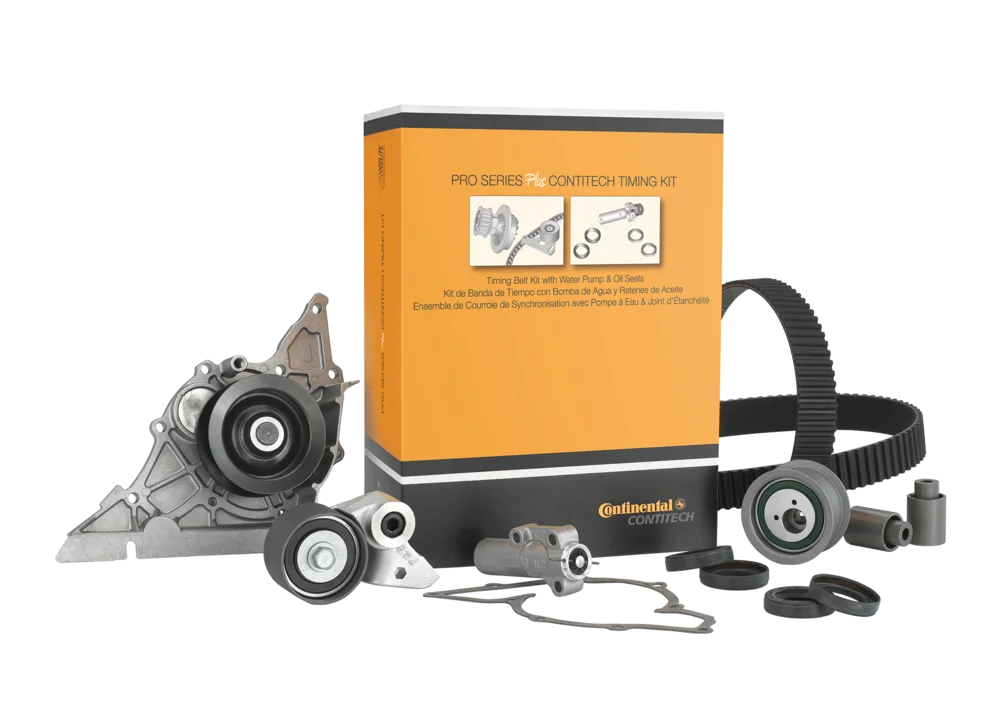
This is where a ContiTech timing belt kit can be more practical than replacing only the belt.
ContiTech Timing Belt Kit: Why Full Kit Replacement Is Better
A ContiTech timing belt kit usually includes the timing belt along with related wear parts such as tensioning pulleys, idlers, guide pulleys, dampers, screws, nuts, or other small parts, depending on the vehicle. Replacing the full kit is often safer than replacing only the belt.
A timing belt does not work alone. It runs with tensioners, pulleys, idlers, and sometimes the water pump. If these old parts are worn, they can damage the new belt.
That is why many mechanics recommend kit replacement.
| Replacement Option | What It Includes |
When It Makes Sense |
| Timing belt only | Belt alone | Only if other parts are confirmed healthy |
| Timing belt kit | Belt, pulleys, tensioners, small parts | Most professional replacements |
| Timing belt kit with water pump | Belt kit plus water pump | When the water pump is driven by a timing belt |
Continental states that timing belt kits contain the timing belt, tensioning pulleys, idlers or guide pulleys, dampers, small parts, and a change sticker depending on the vehicle.
It also notes that when replacing the timing belt, tensioning pulleys and idlers should be changed, and the water pump may also be replaced as a precaution, where applicable.
This is a practical point for Indian workshops. If a customer replaces only the belt and the old tensioner fails later, the repair may have to be repeated. Worse, the new belt may get damaged.
A full kit helps reduce that risk.
Car Timing Belt Price in India: What Affects the Cost?
Car timing belt price in India depends on the vehicle model, engine type, belt brand, and whether you buy only the belt or a full timing belt kit. A genuine ContiTech timing belt kit may cost more than a basic belt, but it offers better replacement confidence when related parts are included.
The price of a timing belt is not the same for every car.
It depends on:
- Car make and model
- Engine size and design
- Belt-only or full kit replacement
- Whether water pump replacement is included
- Brand and product quality
- Genuine vs unknown aftermarket supply
- Labour charges
- Availability of parts
- Additional repair work is needed
For example, replacing only a belt may seem cheaper at first. But if the tensioner, pulley, or water pump fails later, the total repair cost can become higher.
This is why mechanics often look at the full timing system, not just the belt.
OEM vs Aftermarket Timing Belt: What Should Buyers Know?
Not every aftermarket part is poor. Many reputed brands make high-quality aftermarket replacement parts. The concern is mainly with unknown, duplicate, or low-grade belts.
| Factor | Genuine ContiTech Belts |
Cheap Unknown Belts |
| Fitment accuracy | Application-based matching | Fitment may be uncertain |
| Material quality | Brand-controlled standards | Quality may be inconsistent |
| Reliability | Better confidence when fitted correctly | Higher failure risk |
| Replacement value | Stronger long-term value | Low upfront price only |
| Mechanic trust | Suitable for professional repair | May lead to repeated issues |
For a critical engine component, buying the cheapest belt is rarely the best decision. The right belt protects engine timing, reduces breakdown risk, and supports smoother performance.
Why Buy Genuine ContiTech Belts from Krishna Auto Electric?
When buying a timing belt for a car replacement, the supplier matters as much as the brand.
Krishna Auto Electric supplies genuine ContiTech belts, including timing belts, V belts, fan belts, and related belt solutions. Its ContiTech product page also highlights timing kits as part of its offering.
For buyers, this matters because:
- You get access to trusted ContiTech belt products.
- You can source related automotive belt categories from one place.
- You can ask for the right fitment based on vehicle or part requirements.
- You reduce the risk of duplicate or incorrect spare parts.
- You get support from a supplier focused on genuine automobile products.
Conclusion
A timing belt for a car may be small, but its role in engine protection is critical. It keeps the crankshaft and camshaft moving in sync, supports smooth combustion, and helps prevent serious engine damage. When choosing the best timing belt for car replacement, buyers should look beyond the lowest price and check fitment, material quality, heat resistance, and brand reliability. A ContiTech timing belt is a trusted option for many vehicle applications, while a ContiTech timing belt kit can provide a more complete replacement by including related wear parts such as tensioners and pulleys.
Frequently Asked Questions (FAQs) About Timing Belt for Car
1. What is the best timing belt for a car?
The best timing belt for car use is one that fits your engine exactly, comes from a trusted brand, and is bought from a genuine supplier. ContiTech timing belts are a reliable option for many vehicles because they are designed for precise engine synchronisation and durable belt performance.
2. How long does a timing belt last?
A timing belt lasts according to the vehicle manufacturer’s recommended service interval. The interval can vary by car model, engine type, and driving condition. Always follow the owner’s manual or mechanic’s advice instead of waiting for visible damage or engine noise.
3. Is the ContiTech timing belt good?
Yes, a genuine ContiTech timing belt is considered a good choice when it matches the correct vehicle application. ContiTech is known for automotive belt technology, and its timing belts are designed for accurate synchronous power transmission in engine systems.
4. What happens if the timing belt breaks?
If a timing belt breaks, the engine may stop immediately. In some engines, pistons and valves can collide, causing bent valves, piston damage, or major engine repair. This is why preventive replacement is safer than waiting for belt failure.
5. Should I replace only the timing belt or the full timing belt kit?
In many cases, replacing the full timing belt kit is better because tensioners, idlers, pulleys, and small parts also wear over time. A new belt running on worn parts may fail early. A kit replacement gives better repair confidence.
Choose Genuine ContiTech Belts with Confidence
Need the right timing belt for your car, workshop, or spare parts requirement? Krishna Auto Electric can help you source genuine ContiTech belts that match your vehicle application and performance needs. Whether you are looking for a ContiTech timing belt, ContiTech timing belt kit, fan belt, V belt, or related automotive belt category, choosing the right part from a trusted supplier can make a major difference to engine reliability.
Instead of risking poor fitment or uncertain aftermarket quality, speak to a team that understands genuine auto spare parts and application-based selection. Krishna Auto Electric supports buyers with reliable product sourcing and the right belt options for different vehicle requirements.
Contact Krishna Auto Electric today to find the right ContiTech belt solution for your car or workshop.